Chimney repairs and leadwork in Stourbridge, dressed by hand in milled lead.
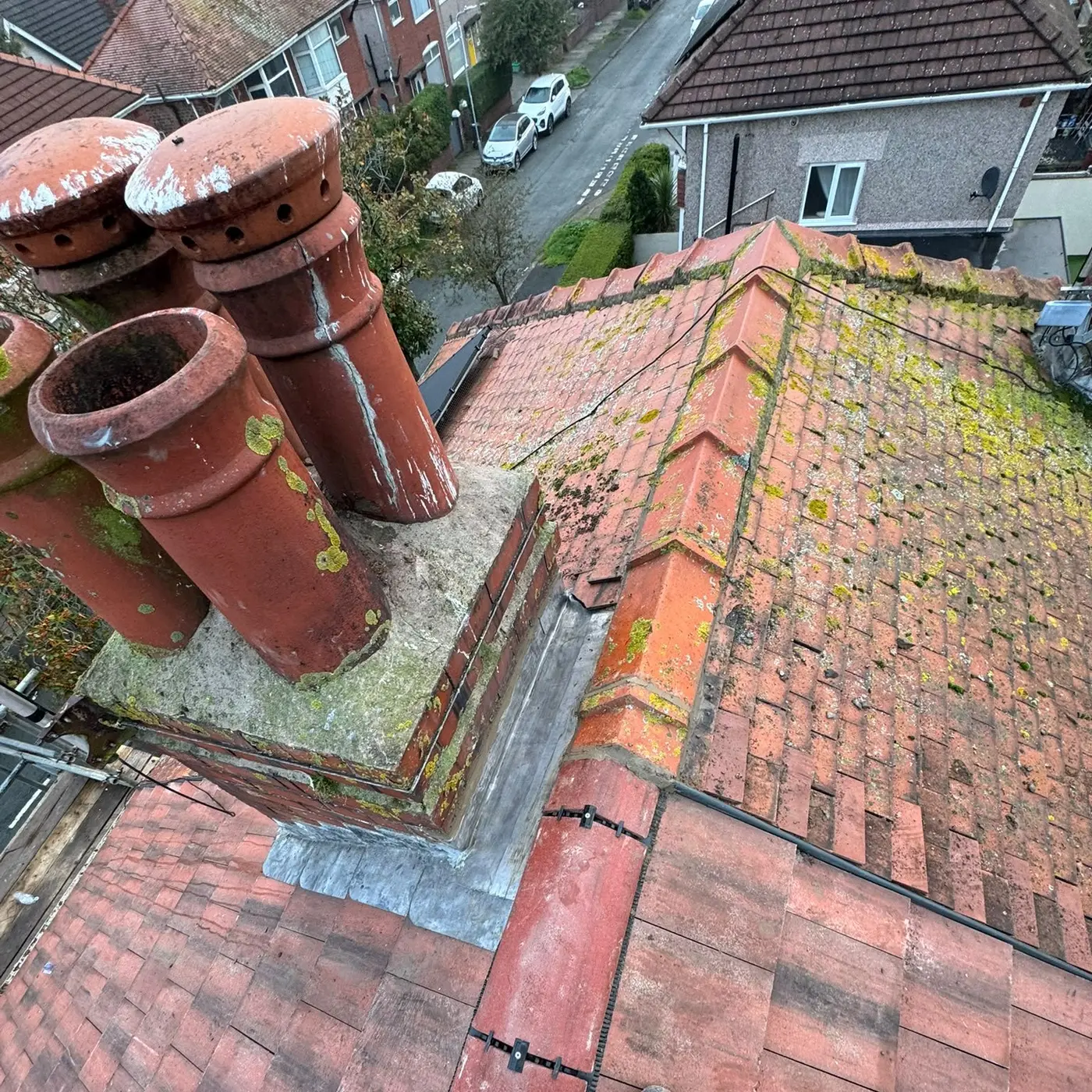
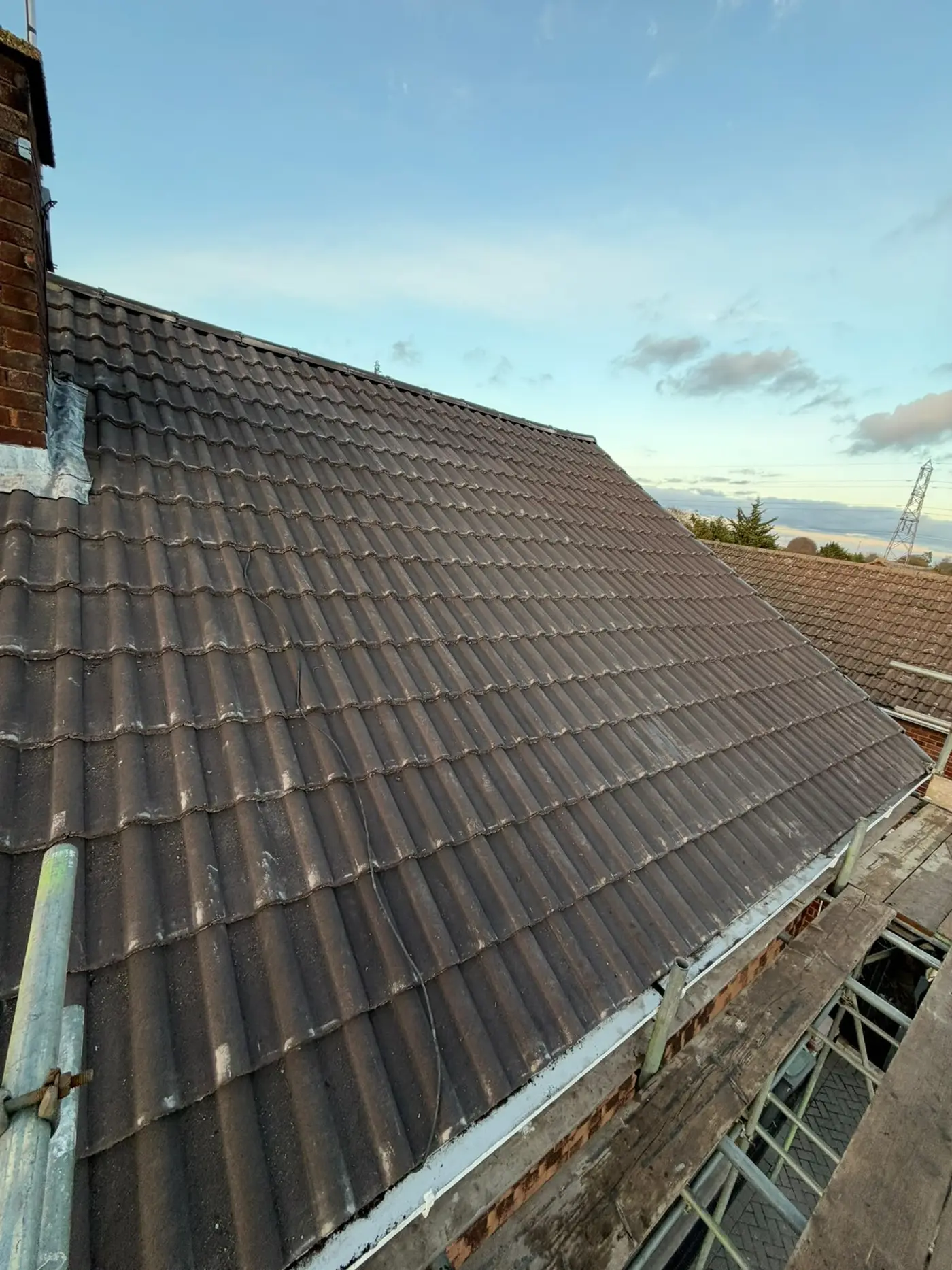
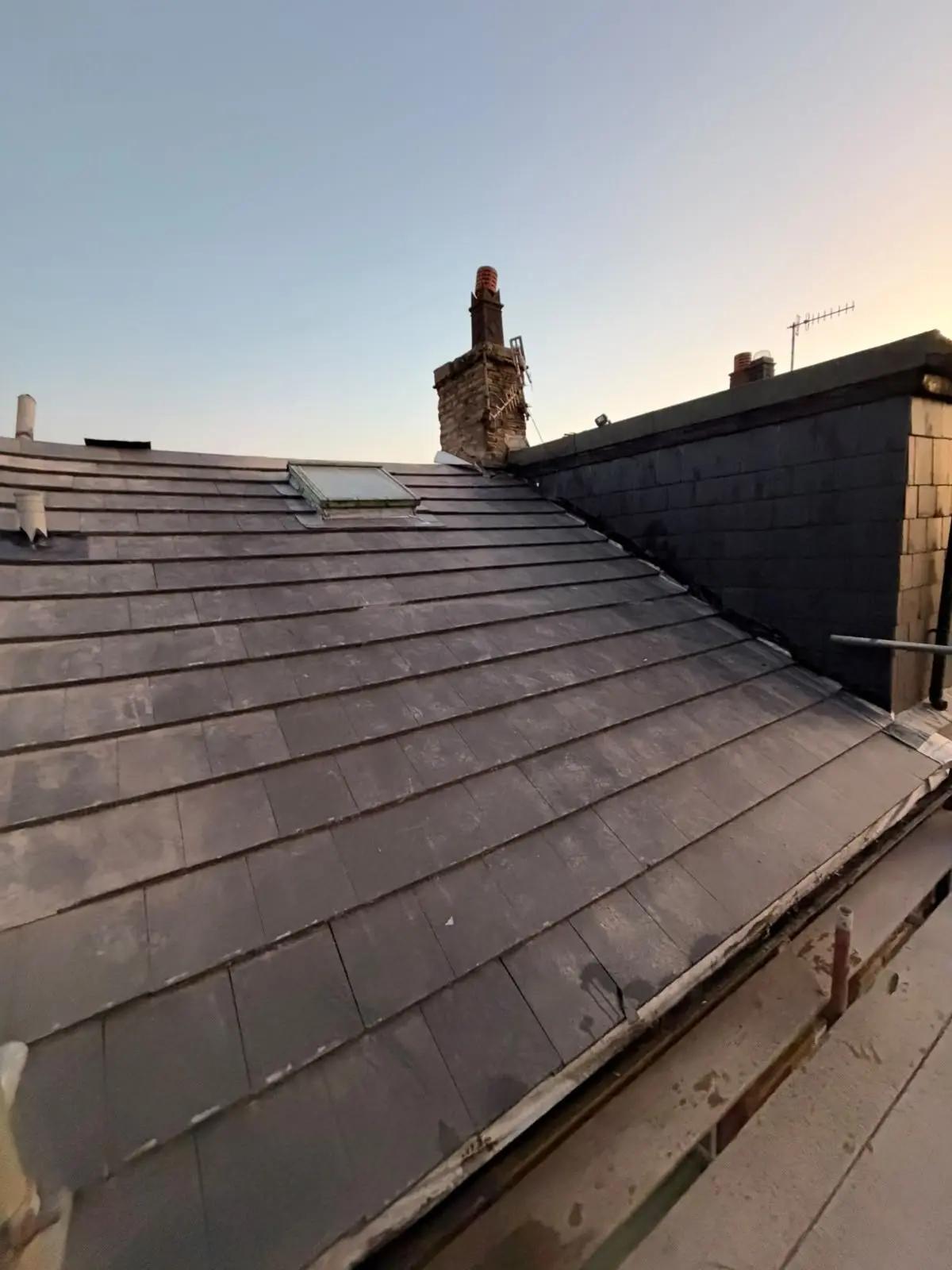
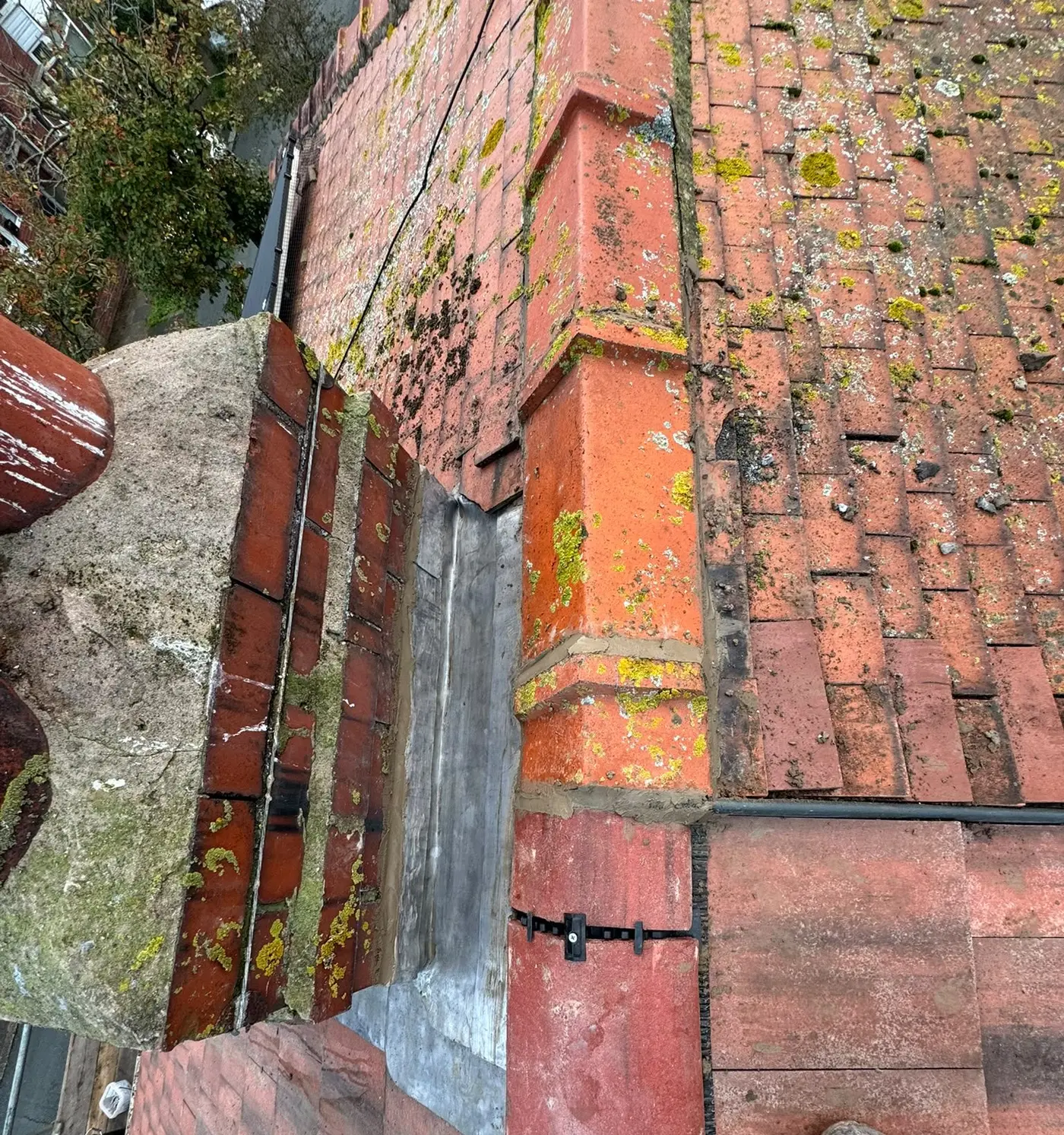
Most chimney leaks start where the stack meets the roof. We repoint the brickwork, renew the flaunching and dress new lead flashing so the joint stays dry.
- SURVEY
- Free, with photographs
Signs a chimney needs attention
- 01A damp patch on the chimney breast
Water is getting in at the stack and tracking down inside the house.
- 02Mortar missing between the bricks
Open joints let rain soak into the stack, and frost then breaks the brickwork apart.
- 03Lead flashing lifted, split or missing
The flashing seals the joint between the stack and the roof. It is the most common source of a chimney leak.
- 04Cracked mortar around the pots
Once the flaunching cracks, water runs straight down inside the stack.
- 05Bits of mortar or brick in the gutter
The stack is shedding material and should be looked at before a storm does more damage.
From our own jobs
Materials and standards
- LEAD
- Milled lead sheet to BS EN 12588: Code 4 for flashings and soakers, Code 5 for aprons and back gutters
- FIXING
- Flashings chased 25 mm into the mortar joint, wedged with lead and pointed
- FINISH
- Patination oil applied to new lead so it does not stain the slates below
- MORTAR
- Joints raked out and repointed in a mortar suited to the age of the brickwork
Straight answers.
Why is my chimney leaking?
The usual causes are failed lead flashing, cracked flaunching around the pots, and open mortar joints. Less often it is a missing cowl on an unused flue. The survey photographs show which it is.
Can a chimney be repointed, or does it need rebuilding?
Most stacks can be repointed. Rebuilding is needed when the bricks themselves have broken down or the stack is leaning. We tell you which after seeing it up close.
How long does lead flashing last?
Lead that is the right thickness and properly fixed lasts for decades. It usually fails early because it was fitted in pieces that are too long, or was never wedged and pointed.