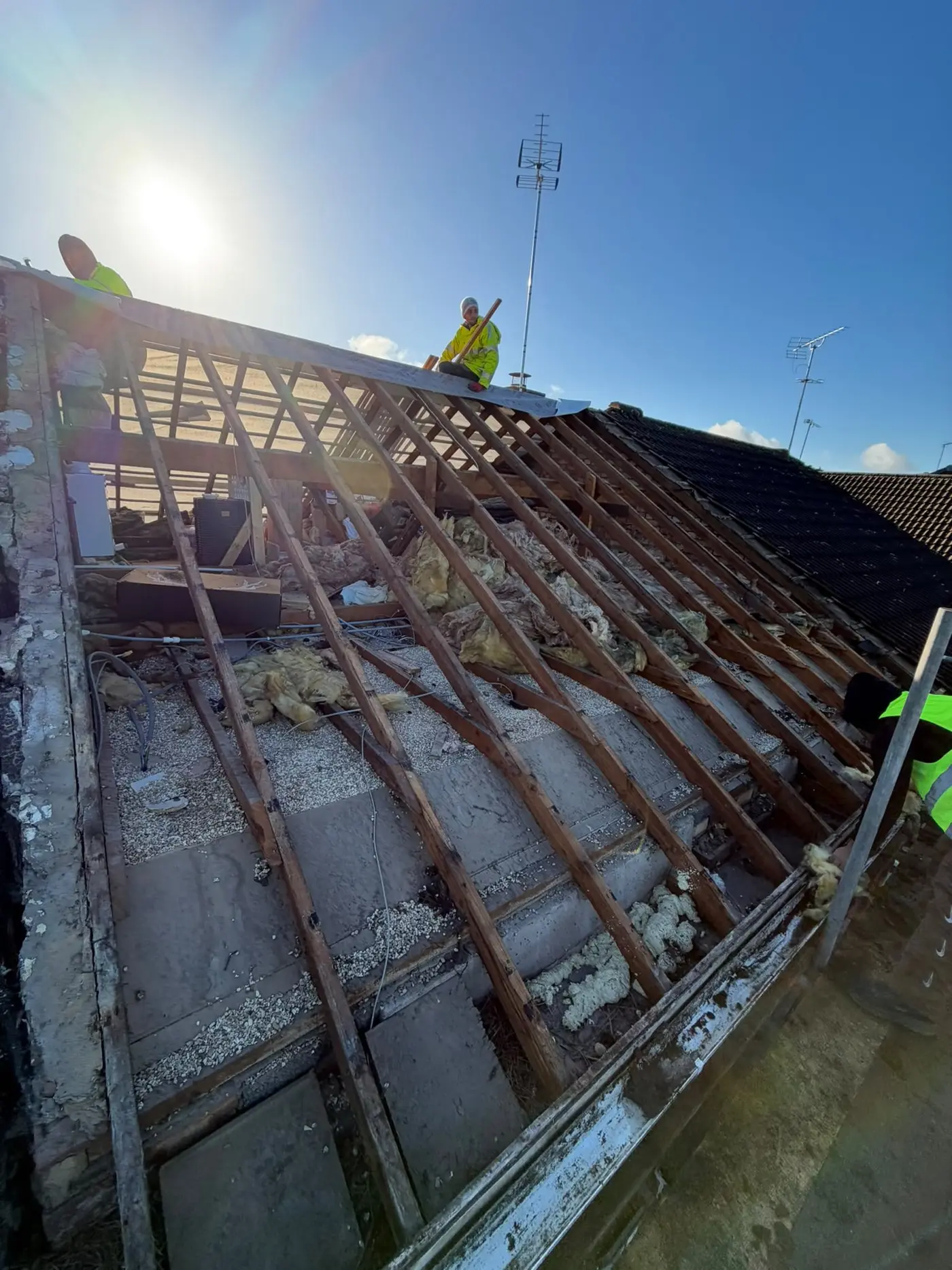
Roof replacement in Stourbridge, stripped to the rafters and rebuilt.
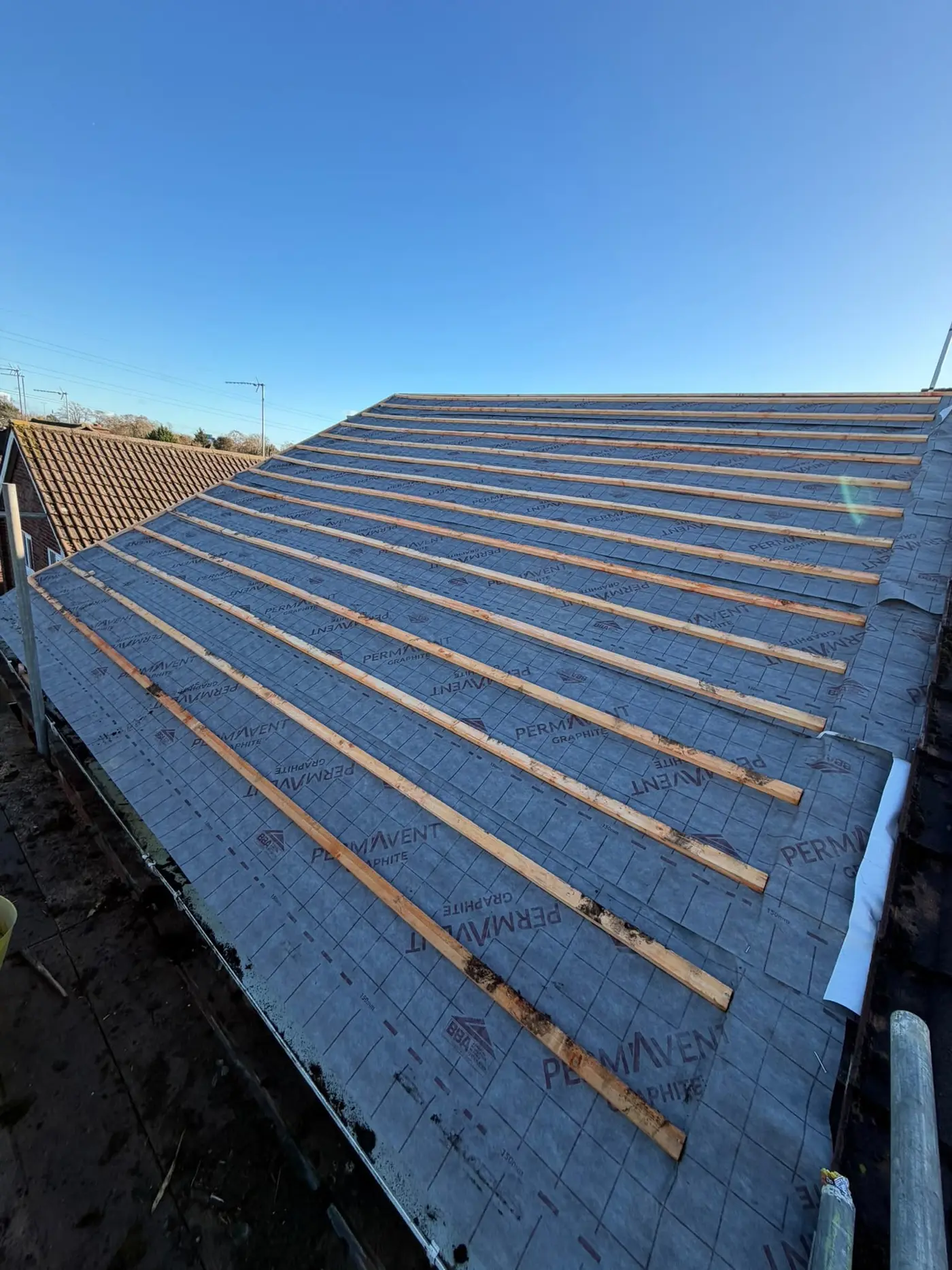
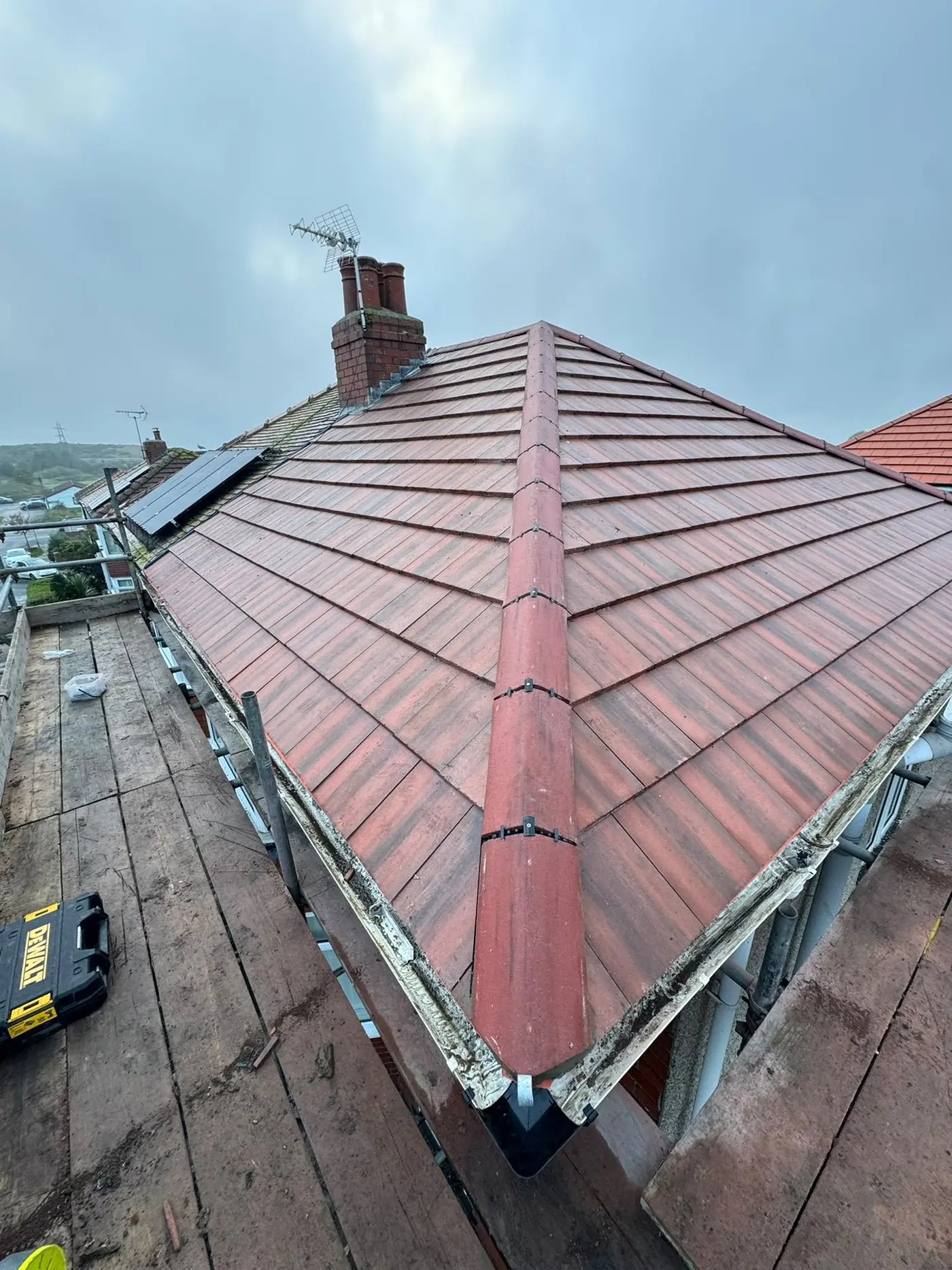
When repairs no longer hold, we strip the roof, check every timber and rebuild it in slate or tile with new membrane, battens and leadwork.
- SURVEY
- Free, with photographs
Signs a roof is due for replacement
- 01The underlay is torn or has perished
Old bitumen felt goes brittle. Once it fails across the roof, patching one area moves the leak to the next.
- 02Slates are slipping across the whole roof
When the nails corrode, slates slide out one after another. Roofers call this nail fatigue.
- 03The roof line sags between the rafters
A dip usually means the battens or timbers underneath have weakened.
- 04Tiles are flaking or crumbling
Frost breaks down the surface of old clay and concrete tiles until they stop shedding water.
- 05You have paid for repair after repair
Past a certain point, the next repair costs more over ten years than a new roof.
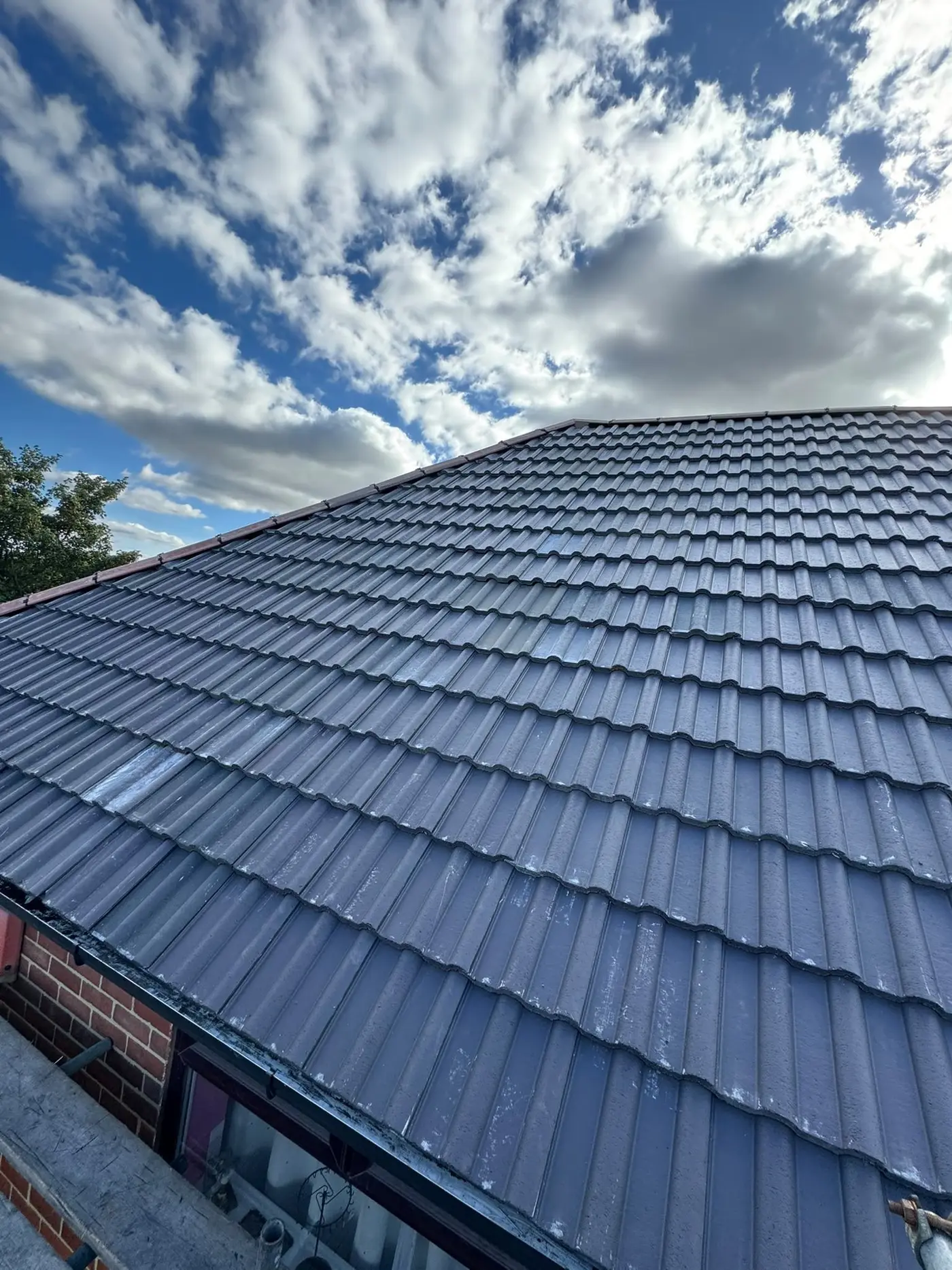
From our own jobs
Materials and standards
- COVERINGS
- Natural slate, clay tile or concrete tile, chosen to suit the house and the street
- FIXING
- Every tile and slate fixed to BS 5534, with dry-fixed ridges, hips and verges
- UNDERLAY
- Breathable membrane over the rafters, with ventilation at eaves and ridge where the design needs it
- BUILDING REGULATIONS
- Replacing a quarter or more of a roof covering normally needs approval.
Straight answers.
How long does a re-roof take?
It depends on the size of the roof and the weather. The quote gives a start date and a programme.
Can we stay in the house while the work is done?
Yes. The work is outside, and the roof is covered with membrane before we leave each day so the house stays dry overnight.
Do I need Building Regulations approval?
Usually, yes. Replacing a quarter or more of the covering is notifiable, and the loft insulation may need upgrading at the same time. We explain what applies to your roof at the survey.